
Learn Colours for Children Surprise Eggs Teach Colours for Children
source
Tag: educational video for children
-

Learn Colours for Children Surprise Eggs | Learn Colors, Learning Videos for kids,
-
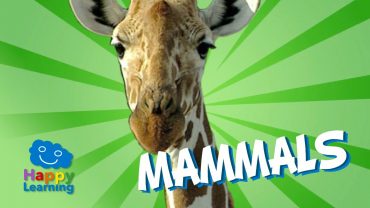
Mammals | Educational Video for Kids
▶ SUBSCRIBE HAPPY LEARNING! http://bit.ly/HappyLearningTV
Educational Videos and songs for Kids. Today we’re going to learn about mammals!
The diversity of mammals is amazing. They can be as huge as these whales,or as tiny as this cute little balancing mouse. They can be noisy like this howler monkey, or quiet like this hedgehog with its sharp, pointy spines.
Even though they’re amazingly diverse, all mammals have a number of common characteristics you should know about, so you can recognize and differentiate them.
All mammals are viviparous, they are born from their mothers’ womb. In their early stages of life, they feed on milk, which they get from their mothers’ breasts where the mammary glands are. And that’s why they’re called mammals. And when they’re little, they’re so cute, aren’t they?
Mammals reproduce by internal fertilization when a sperm cell and an egg join inside the female.
As you can see, they have teeth inside their mouths, and lips around them so they can eat and suck milk.
Most mammals’ bodies are covered with hair, and all mammals breathe with their lungs, even if they live in the sea. Look at these dolphins coming to the surface for air.
The body temperature of mammals doesn’t depend on whether it’s cold or hot outside, because they can maintain their own internal temperature.
Almost all mammals are terrestrial, like camels, and jaguars. Some live in the sea and are called Marine mammals,like these dolphins,and these seals,There’s even a flying mammal, bats are the only mammal that flies.
Mammals have four limbs, which vary depending on where they live. Land mammals have legs,so they can walk,and run when they need to,and Jump.,and sometimes even climb.
Marine mammals have fins so they can swim very fast…
And flying mammals have wings so they can fly through the sky…
Do you know which is the most wonderful mammal that lives on Earth?Human beings! People are mammals too…How mammals feed
Depending on what they eat, mammals can be classified into different groups.
Herbivores only eat plants and their teeth are especially designed for grinding. Horses, sheep and llamas are herbivorous mammals. Some very special herbivores are called ruminants. They swallow their food almost without chewing it, and some of it is digested normally, but some of it is stored in their stomach, and when they want to, they regurgitate it into their mouth to digest it again. Cows, giraffes and goats are ruminants.
Carne means skin or meat in Latin, and that’s what carnivores eat: the flesh of other animals. Their teeth are large and sharp for hunting and tearing at their food.
Carnivores that eat insects and other invertebrates are called insectivores,like these anteaters.
Omnivorous mammals feed on both meat and plants. Bears, monkeys and humans are omnivores: we can eat a tasty burger with lettuce and tomato.
So, let’s remember,
Mammals are viviparous, and in their early stages of life they feed on milk from their mother’s breasts,They have lips and breathe with their lungs,Their body temperature does not depend on the environment they are in, and depending on their food sources, they may be herbivores, carnivores or omnivores.
Easy, right?
So goodbye for now, everybody! And don’t forget to subscribe to Happy Learning!
source -

1 Hour of Kids Music – Educational Videos for Children – Learning Songs for Preschoolers
Let’s have fun learning with our 1 hour of kids music. In these fun educational videos for children we include many of our fun animated learning songs for preschool, Kindergarten, babies, and toddlers to learn! It’s so much fun!With one hour of kids educational songs your children will learn counting, the ABC’s, phonics, animal sounds, days of the week, left and right, shapes, colors as well as classic nursery rhymes! We’ve packed all of the fun, educational songs that we could into this 1 hour of children’s music.
So sit back and enjoy these family friendly, super simple kids learning songs in fun animated format!
Hurray!
0:00 – Left and Right Song
3:00 – Let’s Sing Animal Sounds
4:44 – 5 Little Monkeys Jumping on the Bed
7:26 – Phonics Song
10:03 – Bingo the Dog
12:30 – Counting to 10 Forwards and Backwards
15:17 – Triangle Song
18:04 – Phonics Song with Blocks
21:04 – Learn the 7 Days of the Week
24:20 – Counting to 10 in the Jungle
28:08 – ABC Rap
31:49 – Humpty Dumpty
34:31 – ABC and Phonics Song
37:57 – Color Green
40:33 – ABC Animals
45:06 – Square
48:31 – Counting to 20 with Blocks
51:31 – Wheels on the Bus
54:11 – ABC Song
56:59 – Happy and You Know It
59:40 – ABC Foods————————————————–
SUBSCRIBE HERE…
https://www.youtube.com/c/123abctv?sub_confirmation=1Watch all of our videos on the web! – http://www.123abctv.com/
Follow us on…
Twitter – https://twitter.com/123abctv
Facebook – https://www.facebook.com/123abctv
Google+ – https://plus.google.com/+123abctvLearning is our number one priority! If you have any comments, questions, or requests don’t hesitate to contact us at…
learn at 123abctv dot com
Check out some of our top animated kids songs and videos…
ABC ANIMALS SONG Learn ABC Song Animal Songs for Kids Preschool by 123ABCtv
Counting with Planets | Counting to 100 by 2’s | Counting by 2’s | Count by 2’s to 100
Ocean Animals for Kids – Sea Animal Songs for Children – Learning to Spell – Toddlers Preschool
Desert Animals – Fun Spelling Songs for Children – Kids Spelling – Learning Videos
Counting to 100 – Sports Theme – Learning to Count for Kids Preschool Kindergarten
Learning to Spell in the Jungle – ABC Songs for Kids – Alphabet Toddlers Preschool – Animal Sounds
Counting to 10 Rap – Learning to Count – Counting Rap Songs for Children – Kids Rap Songs
ABC Phonics Song | Phonics Alphabet | ABC Phonics Songs Preschool Kindergarten
Counting on the Farm – Counting Farm Animals – “Farmer in the Dell” Nursery Rhymes Preschool Songs
Learn the ABCs with Foods – Animated Alphabet Song – Educational Kids Songs Children Preschool
Animated Nursery Rhymes
5 LITTLE MONKEYS (JUMPING ON THE BED) –Nursery Rhyme Kids Songs Five Little Monkeys by 123ABCtv
Old MacDonald had a Farm – Animated Nursery Rhymes – Animal Sounds – Kids Songs Toddlers Preschool
Wheels on the Bus (Go Round and Round) – Song for Kids – Nursery Rhyme – Sing Along
Learn all about the ABC’s
ABC Songs 1 Hour – Alphabet Learning – Animated Kids Songs – Preschool Toddlers
The Letter A Songs – ABC Songs – Toddler Baby Preschool – Learn the Alphabet
The Letter B Songs – ABC Songs – Toddler Baby Preschool – Learn the Alphabet
Write the Letter A – ABC Writing for Kids – Alphabet Handwriting
Watch Some of our Newest Videos
Animal Counting Song – Counting to 10 with Animals in the Jungle – Have Fun Counting to 10
Forest Animals Video for Children – Forest Animal Spelling Songs for Kids –Preschoolers Kindergarten
Learn the 7 Days of the Week Song for Kids – Learn Sunday Monday Weekdays – Kindergarten Preschool
Counting by 5’s Song to 100 – Counting to 100 by 5s – Count by 5 to 100 – Count to 100 by 5 for Kids
Hey parents and kids, if you like learning with catchy songs and animated videos then subscribe to our channel. We make new videos EVERY WEEK so you can keep on learning! Education is something we value highly, and we want to make it easy for children to learn while having fun. Our videos center around fun! So stick around and have some fun with us!
source -
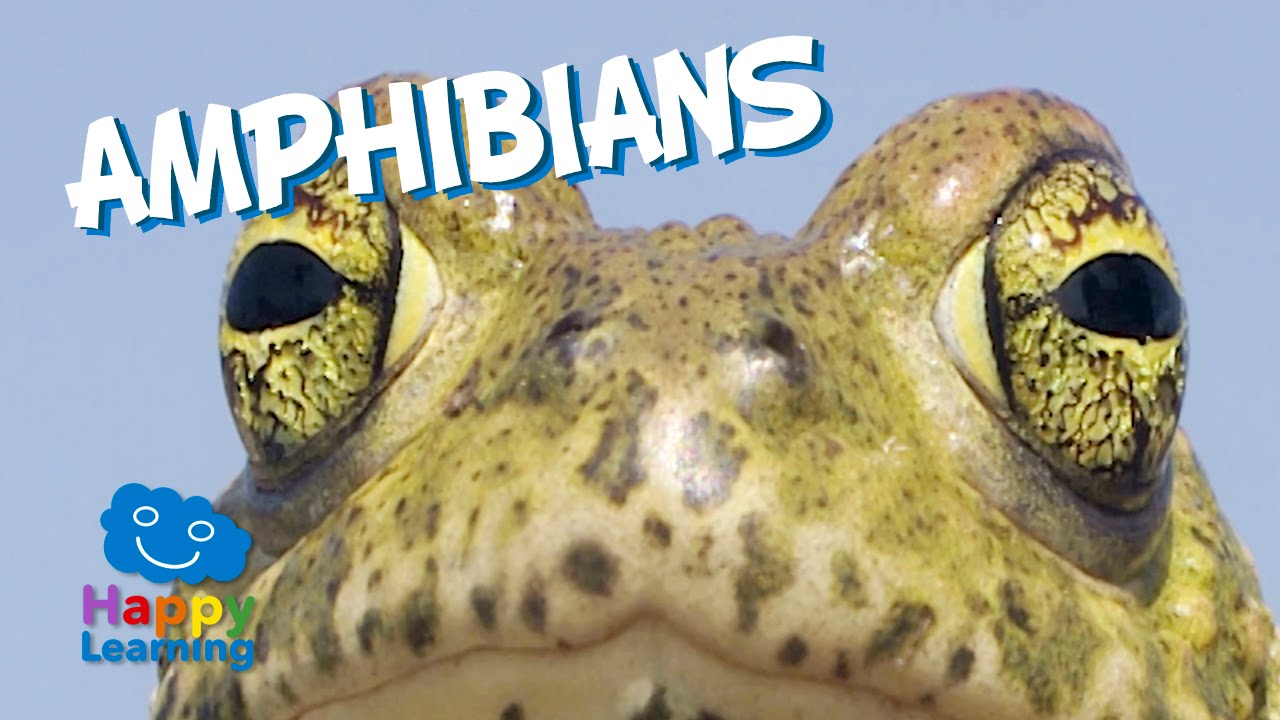
Amphibians | Educational Video for Kids
▶ SUBSCRIBE HAPPY LEARNING! http://bit.ly/HappyLearningTV
Educational Videos and songs for Kids. Today we’re going to learn about amphibians!Hello everybody! Today we’re going to look at a truly amazing group of vertebrates… When they’re born they usually live in water… but when they grow up and become adults they spend most of their time on land. We present – the Amphibians!
All amphibians have some common characteristics that you should know about so you can recognize and differentiate them.
Amphibians have thin, bare skin, with no hairs and scales to protect them. Most have four legs and a membrane between their toes that allows them to move much better in the water.
Amphibians are oviparous, but they don’t incubate their eggs after laying them… they abandon them and don’t care for their young. Not very good parents, huh?
When they hatch, they’re small larvae and live in water. Slowly… very slowly… their bodies go through a process called metamorphosis.
During this process, the body of the amphibian… changes… their front and rear legs, their limbs, grow… and their heads and their bodies develop, so they finally look like their parents.
In the early stages of their lives… amphibians breathe through gills, but when they grow up and become adults… they breathe with their lungs. The problem is, their lungs are very small, and cannot get all the oxygen they need to live. But nature is very clever… and has solved this problem by allowing them to breathe and get the oxygen they need… through their skin. That’s why they need to be near water – to keep their skin wet.
In the early stages of their life, some amphibians are herbivores, but when they grow up… most become carnivores. So they need to hunt…
Some have a long, sticky tongue they shoot out to capture prey.
Aren’t amphibians fascinating? And also a bit strange?!
So let’s remember the most important characteristics…
Amphibians are vertebrates; they’re oviparous; in the early stages of their life they live in water as larvae, but slowly they change until they look just like their parents. This process of change is called metamorphosis.
Amphibians are carnivores, so they have to hunt to eat; they have thin, smooth skin, and breathe through their skin and with their lungs.
Amphibians are so interesting, aren’t they?
Goodbye for now everyone, and don’t forget to subscribe to Happy Learning!▶SUBSCRIBE TO HAPPY LEARNING! http://bit.ly/HappyLearningTV
“Educational Videos and songs for Kids”
source -

Reptiles | Educational Video for Kids
▶ SUBSCRIBE HAPPY LEARNING! http://bit.ly/HappyLearningTV
Educational Videos and songs for Kids. Today we’re going to learn about reptiles!
Reptiles are vertebrate animals which are characterized by their special way of moving: many move by dragging their tummy, or abdomen, on or close to the ground; their name,
in Latin, means just that: reptar mean to crawl or slither.
Many are terrestrial, but there are also some that live in water.
All reptiles have a number of characteristics we should know about so we can recognize them. Reptiles are cold-blooded animals
that breathe with their lungs.
They are oviparous, that is they reproduce by eggs; when the eggs develop and hatch, the babies are just like their parents…
but very small. Aren’t they cute?
As you can see, reptiles’ skin is covered with strong, tough scales, and some, like tortoises, even have a shell. It looks like he has his house on his back, doesn’t it?
As for feeding well, most reptiles are carnivorous… They hunt,
like this crocodile which has just eaten this poor rodent;
or this cute chameleon, with its long, sticky tongue that catches all kinds of insects… Look, look! As we said already,
most reptiles are carnivorous, but some, like this iguana, are herbivorous.
There are lots of interesting things you should know about reptiles,
such as: most snakes have venom in their fangs…
But they’re not as bad as they seem, because they warn us of danger with their bright colors or the sound of their rattles.
Chameleons are very curious: they can change color, copying the landscape around them they blend in with the background so no-one can see them, and they become almost invisible.
So let’s remember the most important characteristics of reptiles.
Reptiles walk by dragging their tummy on or close to the ground;
they are oviparous and their body is covered with strong, hard scales…
They are vertebrates and are cold-blooded… And remember, they breathe with their lungs. Reptiles really are quite interesting, aren’t they? Well, goodbye for now everyone,
and don’t forget to subscribe to Happy Learning!▶SUBSCRIBE TO HAPPY LEARNING! http://bit.ly/HappyLearningTV
“Educational Videos and songs for Kids”
source -

Birds | Educational Video for Kids
▶ SUBSCRIBE HAPPY LEARNING! http://bit.ly/HappyLearningTV
Educational Videos and songs for Kids. In this video we’re going to learn about the birds.They are so diverse, and there are so many colors and shapes, it’s fun to learn about them. For example, this tiny little hummingbird doesn’t look anything like this huge ostrich. And these penguins don’t look much like this peacock with its large fan-shaped tail. Well, they may not look alike, but they’re all birds, and have many things in common.
Birds are oviparous… which as you know, means that they reproduce by laying eggs. The females lay the eggs in nests, in the rocks… or on the ground… And with the heat of their bodies, they incubate the eggs until the little chicks hatch.
Birds don’t have teeth, they have beaks or bills… And these can be very different, depending on what that species of bird feeds on.
They breathe with their lungs, that are connected to… bags full of air… called air sacs… and these help birds to fly. Also, nature, which is very clever, has made their bones hollow, so they weigh very little, and because of this it’s much easier for them to fly.
The skin of birds is covered with feathers: these protect them from the cold and heat. Birds have four limbs, the back ones are legs… and the front ones are wings. Together, the wings and feathers are essential for them to be able to fly… and in some cases… so they can swim.
Birds are terrestrial and most of them can fly. Can you think of any birds that can’t fly? That’s right!!! Penguins and ostriches are two species of birds that cannot fly.
Birds have four types of feathers: those that cover the whole body; flight feathers in the wings that help them to fly; down feathers, which cover the chest and belly and maintain the body at a constant temperature; and tail feathers that help guide the birds’ body like a rudder on a boat.
Birds can be classified into several groups, according to what they eat: herbivores feed on plants and grasses – their beaks are short and strong, and can crush seeds and grains. When they only eat grains, they are called granivores.
Carnivorous birds hunt and eat other animals, using their strong, curved beaks. Within the group of carnivores there are insectivores, that only eat insects, and piscivores that only feed on fish. These birds have pointed beaks that are long and sharp to help them catch the fish. Remember – birds that eat fish are called piscivorous.
The last group – omnivorous birds – includes pigeons and hens, and they eat almost anything.
So remember: birds are oviparous, which means they reproduce by laying eggs; their mouths are beaks or bills and they breathe with their lungs; their skin is covered with feathers; and depending on the food they eat, they can be herbivorous… carnivorous… or omnivorous.
So, now you know a lot more about birds.
Goodbye, everybody, and don’t forget to subscribe to Happy Learning!!!
source


